


Tibetan Vs. Crystal Singing Bowls: A Researched History

Updated: 4 days ago
Introduction
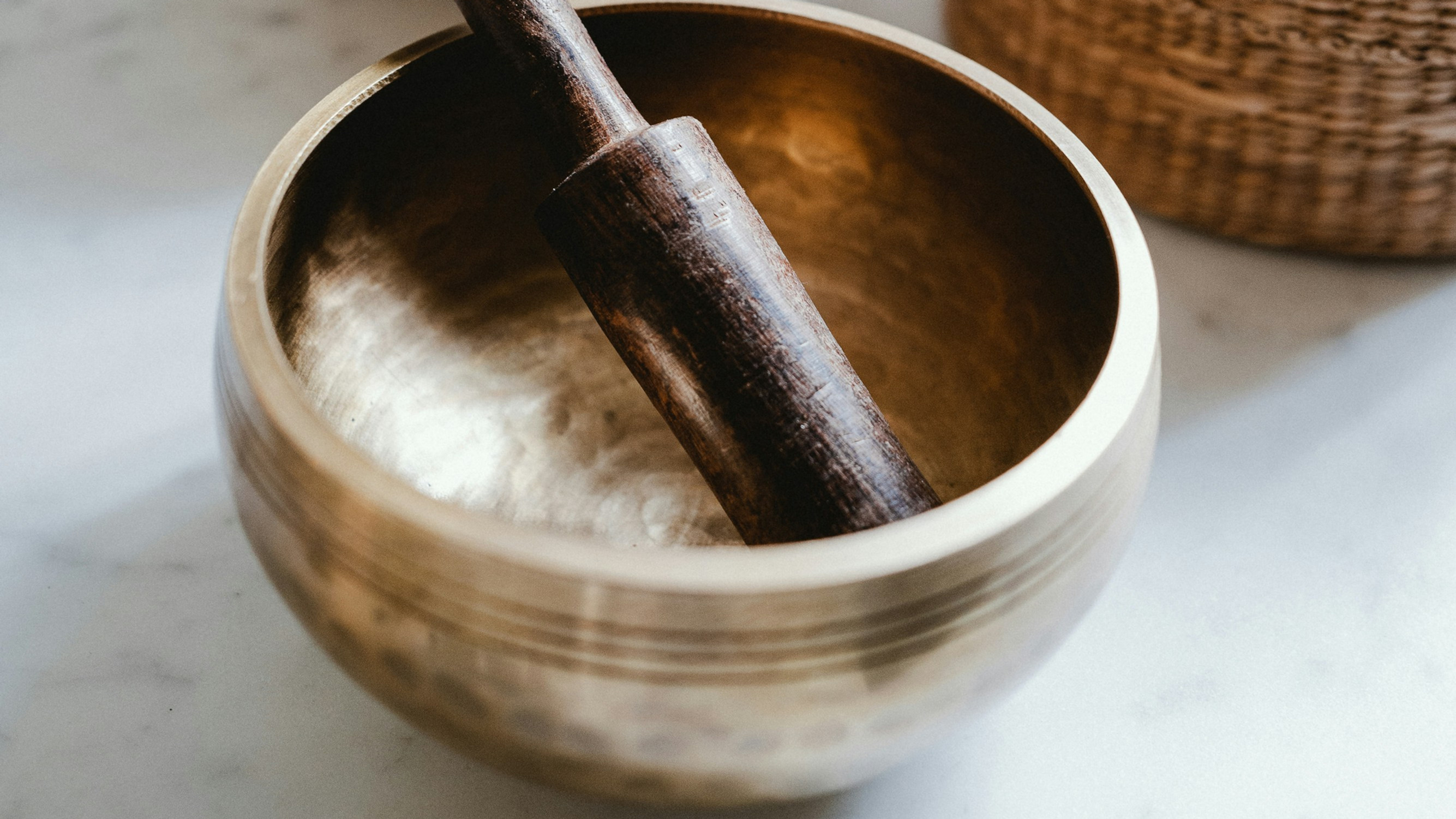
The rise in popularity of singing bowls in the United States and overall Western Hemisphere is an indication that our Western culture is craving something it previously lacked. Through studying the historical origins of the singing bowl, we can gain insights as to what gravitates a growing population to them. The Himalayas, which is the highest elevation mountain range in the world, is also currently and historically the main hub for these beautifully sounding instruments. This is why many bowls are referred to as Himalayan singing bowls or interchangeably Tibetan singing bowls. However, not all singing bowls come from this region, especially with the increasing demand from yoga studios, meditation teachers, and a general public looking for tools of relaxation.
In this article, we’ll discuss the historical context and origins of singing bowls, some recent research on their health benefits, and the differences between traditionally produced bronze bowls and new variations such as the crystal bowl. While shrouded in a little mystery due to the limited amount of written information in English based on what I’ve heard from reliable local sources as well as written guides in book form and blog style internet postings, this is possibly the most accurate information we have on the topic currently.
Historical Context of Singing Bowls
The birth of the singing bowl arises out of the craftsmanship of the Bronze Age. Antique and newly produced bowls with traditional Nepalese methods are fabricated from bronze which is an alloy of tin and copper. According to Joseph Feinstein, the author of The Singing Bowl Book, the oldest known singing bowl currently in existence dates back to approximately 800 years ago and was most likely a Buddhist possession. However, the tradition probably vastly predates this antique partially due to the brittle nature of bronze, as far as metals go, and some other factors we’ll discuss later. Additionally in a historical Tibetan artwork, the argument can be made that a 16th century painting of a meditating man in the forest depicts a singing bowl at his side (link provided below).
Himalayan Art Resources:
In the modern world we live in, it’s hard to imagine a time prior to the invention of the bowl. Baskets and pottery provided ancient people with a means to transport and store goods and materials, such as food, water, shelter supplies, and medicine. It became a symbol of wealth, healing, and abundance. You can even think of Thanksgiving here in the United States, the cornucopia (a basket woven to replicate an animal horn) is depicted overflowing with produce representing a bountiful harvest that will sustain through the harsher conditions of the winter months. If you took a trip to visit an Asian Buddhist temple or monastery, you are likely to find an altar with a Buddha statue, flowers, and a variety of bowls with their own unique purposes. Buddha himself is often depicted with a bowl and a large amount of debate is held on whether or not and where his bowl still exists.
Historically in the Buddhist tradition, monks were renunciates of worldly possessions. They owned the robe that clothed them and a bowl. The bowl was primarily used for collection of donated food from locals in town. As time passed the alms bowl evolved. What was once traditionally composed of either wood or stone was now being produced out of metal. This is most likely the origins of the invention of the singing bowl. The earliest known examples that still exist of metal bowls produced in and around the Himalayan region do not produce the beautiful tones of a singing bowl. Our knowledge on the transition from a very utilitarian object to an instrument is very limited with a fuzzy timeline. Ultimately though the enjoyable and compelling vibrations produced when stuck became a way to invite Buddhist patrons to offer up donations. Interestingly, this maintains the essence of the initial purpose of the Buddhist’s bowl and continues to be a symbol of abundance and healing.
A Modern Interpretation of Sound Healing Benefits
If you are reading this article, you may have attended a sound bath before and are curious to learn more about singing bowls. However, if you’ve never experienced a sound bath before, it typically consists of a sound healing facilitator with a variety of singing bowls and/or gongs in a dimly lit room. People typically lay on the floor for the duration of the sound bath approximately 1 to 1.5 hours in length. However, depending on the space, the facilitator may be able to offer more accessible accommodations. For example at Sacred Practice Reiki studio, if requested (ideally prior to the event) a massage table can be set up to eliminate the need to get up and off the floor. Additionally some people may choose to sit cross legged on the floor or in a chair. Below is a link to give you a 20 minute sample of what an in person sound bath is like.
Sacred Practice YouTube Sound Bath:
In the West, singing bowls have become very popular tools for deepening meditation. As a listener, they have an incredible ability to help shift people’s brainwaves into more relaxed and meditative states even if you have never meditated before. As a player, they help cultivate peaceful focus and awareness. There is a very limited amount of scientific research that has been conducted on their healing capabilities from a Western perspective. However, I was able to find an article on AARP’s website discussing some of the research we do currently have on the topic (link provided below). As an overview it mentions individuals experiencing “significantly reduced tension, anger, fatigue, and depressed mood” as well as “reducing undesirable moods and increasing feelings of inner peace and spiritual well-being”.
AARP Article:
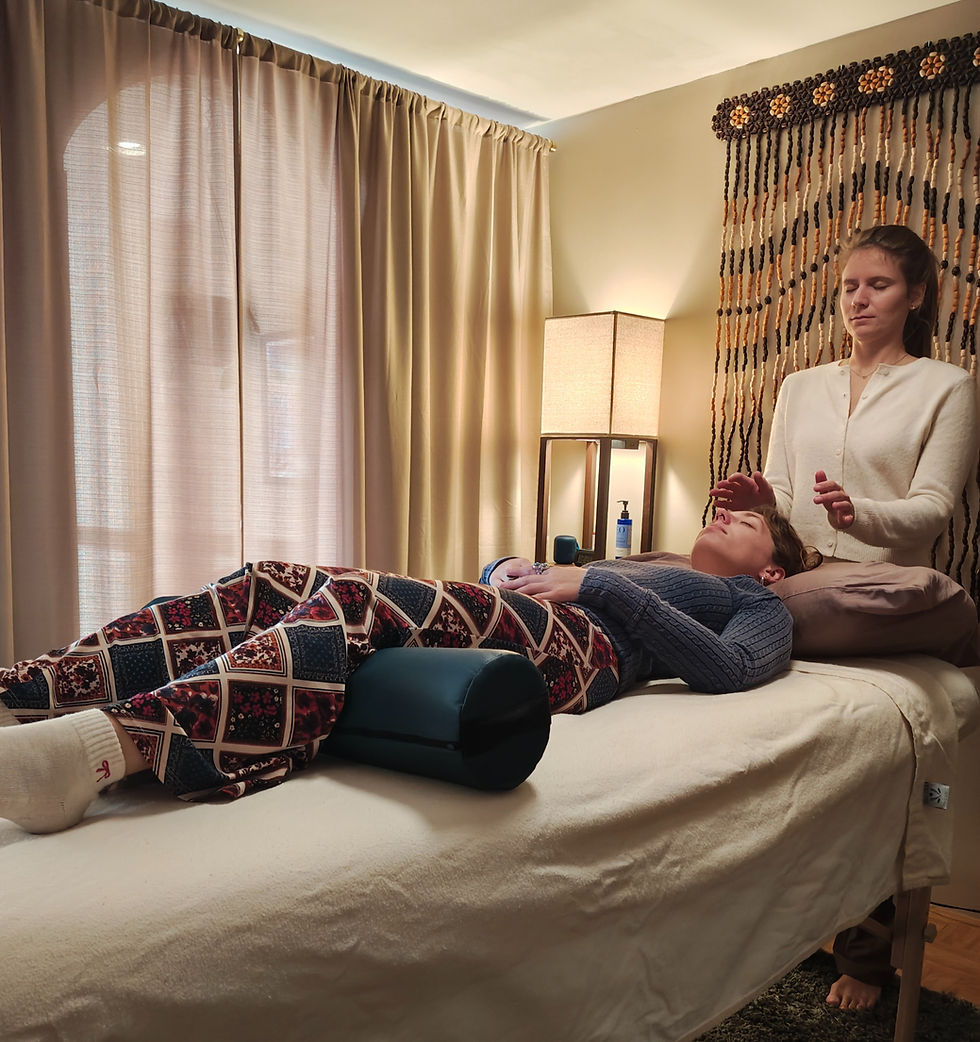
At the sound baths at Sacred Practice Reiki Studio that I’ve facilitated, I can attest to witnessing similar outcomes as described by the AARP article. Some attendees have expressed to me reduced tension and pain, improved mood, a heightened sense of inner peace, and more restful sleep cycles following the Sound Bath Journey event. Some people even fall asleep briefly during the evening experience. Due to the group environment of a sound bath and the lack of verbal communication through most of the event (I do offer approximately 5-10 minutes of breathwork cues and simple body relaxation awareness at the start to help ease into the sound bath.) a handful of people have reported to me that it was challenging in the beginning to release the active state of their mind. Most eventually do reach a more serene place. However, the process of getting there can take longer than they might have wished. In cases like this, I explain how sometimes to reach a calm mind, we first have to sit with the thoughts that are present even if we desire to have reached that calmer mind already. Additionally, a private Reiki and Sound Healing session could be a viable alternative. Since the focus is specifically on you in a private session instead of the overall group, the spinning energies of your mind will most likely ground more quickly. The Reiki works to soothe your nervous system and the singing bowls are like “the icing on the cake.”
Modernization of Metal Singing Bowl Production
Traditionally, singing bowls were hand hammered with a heating and cooling method of high tin alloy bronze that is still alive today in Nepal. While some of the mastery in craftsmanship visible in antique singing bowls has been lost, the annealing technique used by craftsmen to manufacture contemporary singing bowls with this traditional method is still very masterful and advanced, especially when compared to other machine based inventions for production. To offer consumers less expensive pricing, some manufacturers cast brass. Bronze bowls produce the best sound with more rich and complex overtones. However, due to the brittle nature of bronze there is not a current method to cast it effectively into a singing bowl. To give more of an appearance of authenticity some brass bowls are even cast with dimples to look hammered. Additionally, some brass bowls are cast to nest within one another for convenient storage and/or transportation, which is ideal for mobile sound healers who visit a variety of venues.
The Chakra System & a Blending of Cultures
The musical scale consists of seven notes, so if you purchase a complete set of singing bowls it will come in a set of seven. Coincidence or not, the modern chakra system that arose from the cross-sectioning of yoga and Hinduism consists of seven main chakras that rise along the spine. In the Western world, singing bowls have been largely adapted by Western yogis, creating another interesting intersection of culture. However, this is not the first time that Buddhist culture and yoga intertwined. Yoga was practiced in Tibet centuries ago and is well documented by a bountiful amount of historical art. Prior to the incorporation of Tibet into the People's Republic of China, His Holiness the Dalai Lama, a major spiritual leader of Buddhism, resided in the nation sometimes referred to as “the roof of the world”. In 1959, he and the Tibetan government in exile relocated to the mountainous town of Dharamshala, India, which is somewhat regionally close to Nepal. Nepal being situated between Tibet and India. This draws back to the conversation of why traditionally made singing bowls are sometimes referred to as Tibetan singing bowls or interchangeably Himalayan singing bowls. Today, Nepal is the hub of production for these historical healing instruments. Additionally, during this conflict thousands of Buddhist temples and monasteries were destroyed in Tibet which could explain why the oldest known singing bowl is only 800 years old.
Each bowl is crafted to a specific note and each major musical note is associated with a specific chakra. The root chakra is associated with the C note, the sacral is associated with the D note, the solar plexus is associated with the E note, and so on. The chakra system is a roadmap for personal awareness, growth, and healing that developed out of deep reflections and meditation. Chakras are energy hubs that are connected by pathways known as Nadis. There is some compelling imagery of nerve clusterings in and around the modern locations of the seven main chakras. Chakra loosely translates to “wheel” which indicates movement. When energy becomes too stagnant it can create blockages but also if it becomes too hyperactive it can cause damage to the system that will require repair. If you are interested in learning more on the chakra system, I recommend the book listed below.
Charka Reading Material Recommendation:
Wheels of Life by Anodea Judith PHD
The Pros & Cons of Crystal Singing Bowls
Another fascinating evolution in singing bowls as sound healing instruments is the discovery and popularity of the crystal bowl. Similar to the metal bowl, the first crystal bowl was not used for sound healing. From my understanding on the topic, large quart crystal bowls were used in the process of producing floppy disks. If you are not familiar with floppy disks they were utilized prior to the invention of “the cloud” and were a type of removable magnetic storage medium used to save and transfer computer data. Due to their thin nature, they earned their nickname. Apparently, some of these production artifacts are still in circulation and purchased as collector’s items.
Crystal singing bowls have become extremely popular in the past 10-15 years. From my experience working with a variety of types of singing bowls, crystal bowls are the easiest to play (similar to an electric guitar). However, they lack the capacity for more complex and enriching overtones of metal bowls (similar to an acoustic guitar). Metal bowls, particularly of traditional craftsmanship, are more responsive, interactive, and sensitive to their environment which can result in peculiar outcomes of singing and striking. For example, crystal bowls will give a sound healer a consistently loud tone so it does well in larger venues without a sound system. Metal bowls once they’ve been played for a while may vibrate up to the volume of a crystal bowl but the practitioner has less control over the output and therefore has to listen more closely to see how the bowl wants to unfold its sound with the environment.
Additionally, crystal singing bowls can be purchased as stackable sets in carrying cases, which is very convenient for storage and transportation. Like nesting metal bowls, crystal bowls can be conveniently purchased online due to their more consistent sound from a uniform production. Traditionally manufactured bowls should be purchased in person to ensure the sound qualities of the bowl align with the desires of the investor, especially since the bowl’s full body vibratory nature is a bit trickier to record than other instruments.
Conclusion
Even beyond singing bowls, there are many instruments that can be used in a sound bath or more broadly for sound healing. In this article, I do not pose one type of instrument as better than another, because they all have their own unique strengths and weaknesses. For this reason, many sound healing practitioners blend multiple instruments together for a heightened experience. If you are interested in purchasing your first bowl or expanding on an already existing collection, I hope this has given you some insights to make an informed shopping decision.
If you are interested in attending a sound bath, I recommend doing a little research on providers in your area before signing up to help ensure the best quality experience.
As the founder and owner of Sacred Practice Reiki Studio, I have been working with Tibetan singing bowls as a sound healing facilitator since 2018, and attending sound baths since 2015. To see when the next Sound Bath Journey event is offered at the studio, visit the event’s tab or click the link below.

Comments